
products
Product Details
Products Description of Collagenase CAS#9001-12-1
Collagenase, also referred to as clostridial peptidase, is a proteolytic enzyme produced through the fermentation of Clostridium histolyticum.
Medical-grade collagenase is purified from the culture broth of Clostridium histolyticum ATCC 21000 and demonstrates strong catalytic activity toward peptide bonds containing the Gly–Pro sequence.
By cleaving native collagen molecules, it creates favorable conditions for the action of other proteases, giving it a unique ability to both hydrolyze and denature collagen.
The medical enzyme derived from collagenase can effectively digest both natural and denatured collagen, exhibits a strong effect on necrotic tissue, and promotes the formation of granulation tissue as well as the growth of epithelial cells.
This product does not act on globulin or fibrin, thereby preserving normal blood vessels and muscle tissue. It is widely used for debridement, scab removal, and the treatment of chronic skin ulcers, bedsores, and second- and third-degree burns.
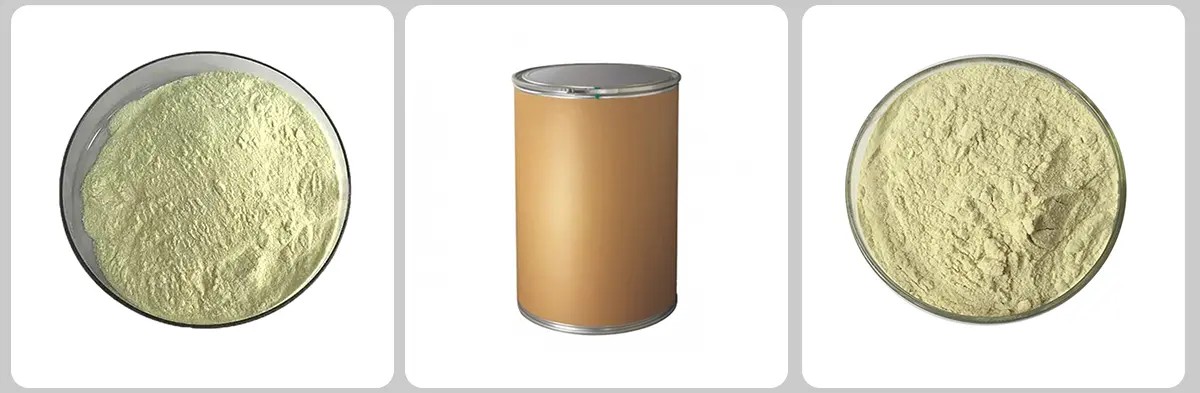
Collagenase Chemical Properties

Product Application of Collagenase CAS#9001-12-1
Role in Wound Healing and Scar Management
Collagen is essential in the processes of wound repair and scar formation. It serves as a fundamental component of elastic tissue and adhesive materials, while also promoting cell growth, differentiation, tissue development, and connective tissue proliferation. In addition, collagen supports capillary regeneration, induces chemotaxis of monocytes and fibroblasts, and helps nourish and regulate granulation tissue. Studies have shown that collagen is effective in treating skin ulcers of various causes, promoting epithelialization of both superficial and deep ulcer areas and facilitating granulation tissue formation.Importance in Bone Structure and Strength
Approximately 70–80% of the organic content of bone consists of collagen. During bone formation, collagen fibers are first synthesized to create the structural framework. For this reason, collagen is often referred to as the “bone within bone.” Its fibers provide strength, flexibility, and elasticity. Just as steel reinforcement supports concrete columns, collagen fibers reinforce bones; insufficient collagen is comparable to using poor-quality steel, significantly increasing fracture risk.Support Function in Breast Structure
The significance of collagen in breast support has long been recognized. Breasts are mainly composed of connective tissue and adipose tissue, and their firmness and shape largely depend on the strength of connective tissue. Collagen, as its primary component, interlaces with polysaccharide proteins to form a network structure that provides mechanical strength, supporting body contours and maintaining an upright posture.Protective and Elastic Function in Skin
Often described as “bone within bone, skin within skin, and flesh within flesh,” collagen forms the structural foundation of the dermis. The dermis, approximately 2 mm thick, consists of the papillary, subpapillary, and reticular layers and is primarily made up of proteins, mainly collagen and elastin. About 70% of the skin’s composition is collagen. Acting like a protective covering over the body, collagen enables the skin to withstand movement while maintaining appropriate elasticity, firmness, and protective strength.
Request A Quote?
First class quality service and professional after-sales team.
In order to provide you the suitable machine , pls offer below message for us
Get in Touch
We respect your confidentiality and all information are protected.
